
Replacing an old gas boiler with a heat pump can improve your home’s heating efficiency, but the initial quotation may not cover every expense. Equipment, installation, electrical work, radiators, pipework and outdoor modifications can all affect the final bill. For homeowners in Düsseldorf and North Rhine-Westphalia (NRW), the gas boiler-to-heat-pump cost depends on the property, the type of heat pump and the condition of the existing heating system.
A complete air-to-water heat pump installation in Germany may cost around €27,000–€40,000 before subsidies. Ground-source and groundwater systems can cost considerably more because they require drilling, excavation or specialist assessments. Additional expenses may include meter cabinet upgrades, radiator replacement, boiler removal and gas connection termination. Not every property needs all these changes, so a technical assessment and itemised quotation are essential before signing a contract.

A complete installation generally covers the heat pump, delivery, connection to the existing heating system and commissioning. Depending on the quotation, it may also include a hot-water cylinder, buffer tank, electrical connections and hydraulic balancing.
However, not every installer includes the same services. One quotation might exclude the outdoor foundation, meter cabinet upgrades or removal of the old boiler, while another includes them.
Before comparing offers, check whether the price covers:
A professional installation assessment in Düsseldorf can help determine which upgrades your property needs before work begins.
The type of heat pump is one of the biggest factors affecting your budget. The following ranges are taken from the supplied 2026 cost guide and are broad German market estimates for typical residential installations, not fixed Düsseldorf quotations.
The final budget depends on the heat pump type, the condition of the existing heating system and the additional work required.
An air-to-water heat pump uses outdoor air and is generally the most straightforward option for a detached or semi-detached home. Installation usually takes around two to three days, although preparation and additional building work can extend the project.
The supplied cost guide estimates that the equipment alone may cost €10,000–€16,000 for a typical residential unit with 8–12 kW of heating output. Installation and assembly may add €4,000–€8,000, before any excluded extras.
Modern monobloc systems can simplify installation because the refrigerant circuit does not need to run inside the house. Models using R290, a natural propane refrigerant, can also reach flow temperatures of up to 75°C, which may help in homes with conventional radiators.
Ground-source systems extract heat from the ground, where temperatures remain relatively stable throughout the year. This can support higher seasonal performance factors, commonly around 3.5–5.0 in the supplied guide.
The extra cost comes from accessing the heat source. Vertical probes may require €6,000–€15,000 for drilling, while horizontal collectors may cost €4,000–€8,000 and require sufficient garden space.
Drilling can also require permission from the relevant water authority. Soil conditions, drilling depth and site restrictions affect both cost and feasibility.
Water-to-water systems use groundwater as their heat source. They can achieve high seasonal performance factors, but they need suitable groundwater conditions and more extensive preparation.
The two wells, water-quality report and permit may together cost €8,000–€27,000. High iron or manganese levels can create corrosion risks, so a water assessment is important before choosing this system.
For most homeowners, an air-to-water model offers a simpler balance of installation cost, practicality and performance. A ground-source or groundwater system may be worth considering where the site and long-term heating requirements justify the additional investment.
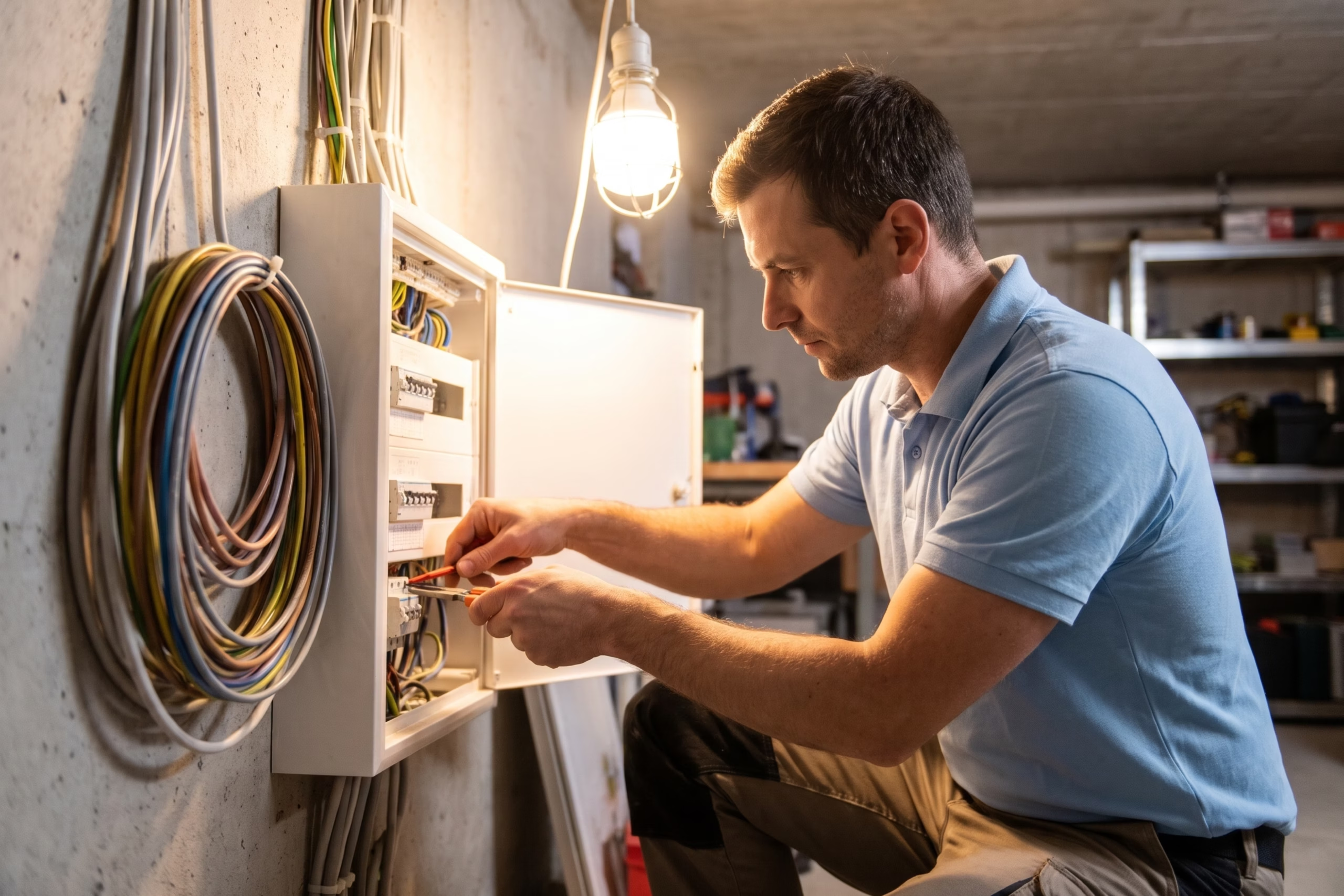
Older properties may need a dedicated circuit, additional wiring, protective devices or modifications to the meter cabinet (Zählerschrank). According to the supplied cost guide, electrical work may cost around €500–€3,000, depending on the existing installation and whether a separate heat-pump meter is required.
A separate meter may also allow access to a dedicated electricity tariff. However, the savings depend on the tariff, metering costs and the network operator’s conditions.
In Düsseldorf, the installer should confirm the applicable registration requirements and rules for controllable electrical devices under Section 14a of the German Energy Industry Act (EnWG).
Heat pumps usually operate more efficiently at lower flow temperatures than gas boilers. Some existing radiators may need replacing if they cannot deliver enough heat at these temperatures.
However, underfloor heating is not a requirement for every heat pump installation. Many older homes can continue using conventional radiators.
The supplied guide suggests the following rough costs:
These are indicative project allowances, not per-radiator prices. The actual amount depends on the number of radiators, their size and the plumbing work required.
A useful preliminary check is to observe your home on a cold day when the outdoor temperature is below 5°C. If your heating system can maintain comfortable indoor temperatures with a flow temperature of 55°C, your radiators may already be suitable. If some rooms remain cold, a specialist should assess their heat output before recommending replacements.
Do not treat this as a substitute for a professional heat-loss calculation.
The existing heating pipes may need modifications if they cannot provide sufficient water flow. Other adjustments can involve valves, circulation pumps, pipe insulation and connections.
Hydraulic balancing (hydraulischer Abgleich) helps distribute heating water correctly throughout the property. The supplied guide estimates costs of around €500–€1,000, although the actual price depends on the heating system and scope of work.
Ask your installer to list pipework changes, balancing and replacement components separately. This helps prevent necessary work from being confused with optional upgrades.
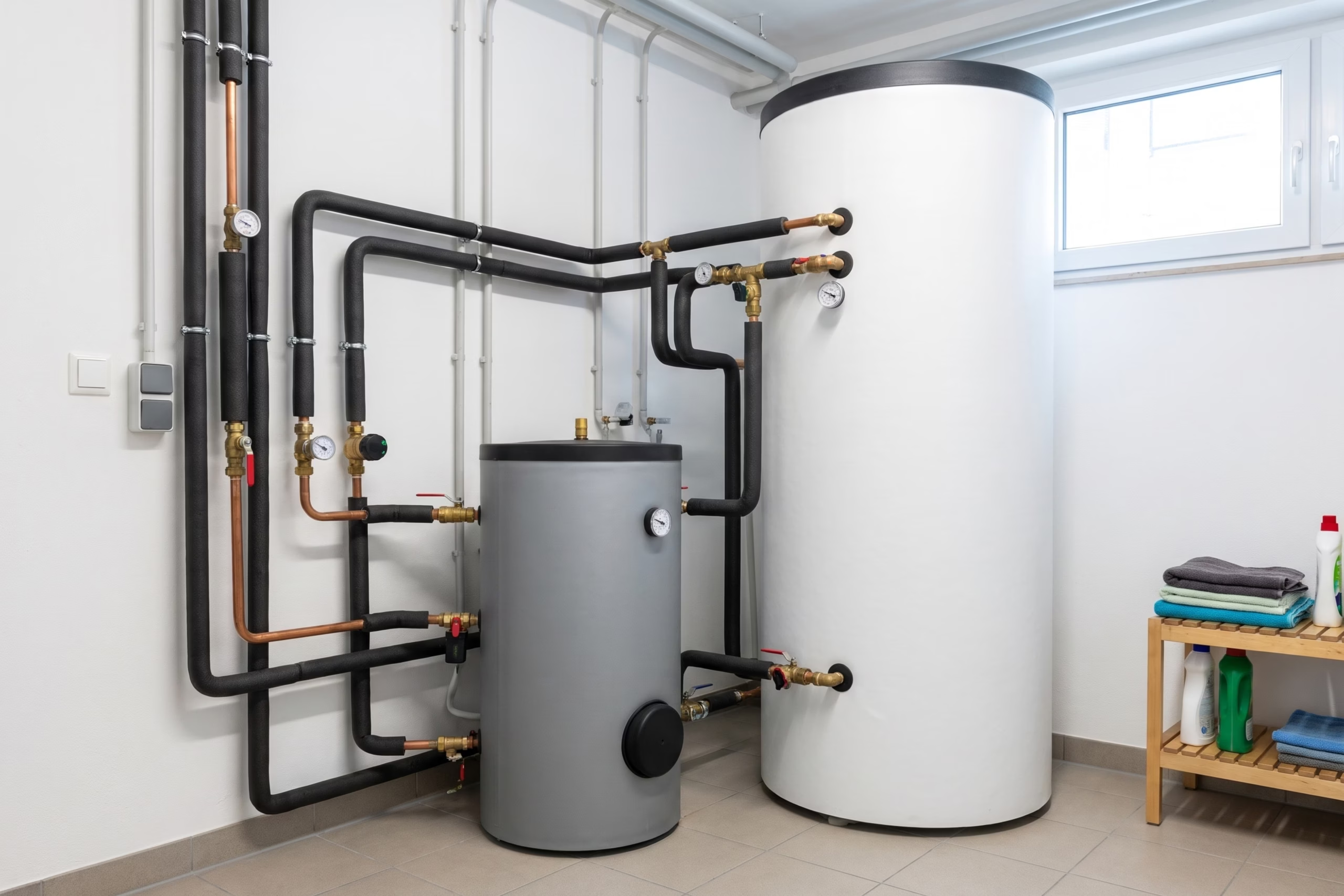
If the existing gas boiler heats domestic hot water directly, your new system may require a compatible cylinder. The supplied guide estimates around €1,500–€3,000 for a hot-water tank or fresh-water station.
A buffer tank may cost another €1,500–€3,000 if required. However, a buffer tank is not essential for every installation. Its suitability depends on the system design and manufacturer’s requirements.
Ask which components are necessary, whether any existing equipment can be reused and whether there is sufficient space for the proposed setup.
Removing the old boiler involves safe disconnection, dismantling and disposal. The supplied guide estimates €1,500–€2,500 for removing an old gas or oil heating system, including tank cleaning where applicable. A gas boiler installation will not necessarily involve oil-tank work, so request a price specific to your property.
Gas meter removal and permanent connection termination are separate matters. Charges depend on the supplier, network operator and existing arrangement. If the connection remains active, standing charges may continue.
Confirm who arranges the disconnection, what it costs and whether the gas connection will be permanently decommissioned or temporarily disconnected.
An outdoor unit needs a suitable base or mounting arrangement. The supplied guide estimates €500–€1,500 for a foundation, but excavation, drainage, wall penetrations and garden restoration can increase the total.
Noise protection may also need consideration, especially in terraced houses or properties with limited outdoor space. Düsseldorf has removed the former general three-metre boundary setback for heat pumps, but noise-protection requirements still apply. Ask the installer to inspect the proposed location and include the foundation, drainage, vibration isolation and restoration work where required.
A heat-loss calculation (add 10 measurements an installer should take “link”) helps determine the correct heat pump size. An oversized unit may cycle on and off too frequently, while an undersized unit may struggle on cold days. The supplied guide estimates €450–€700 for a heating-load calculation, with specialist reports potentially costing more.
Some older homes may also benefit from targeted insulation improvements. Replacing inefficient windows or improving roof insulation can reduce heat demand, but extensive renovation is not automatically required before installing a heat pump.
Finally, unexpected problems such as corroded pipe connections, damaged valves or difficult access can increase labour costs. Ask the installer to identify provisional costs and agree that additional work requires your approval.
The following table separates the major expenses using the estimates from the supplied guide. Some items are already included in a complete installation package, so they should not be counted twice.
Important: The complete installation ranges may already include some components and labour. The additional figures apply only when those items are excluded or genuinely required beyond the quoted scope.
Consider an illustrative older home in Düsseldorf with an initial €30,000 air-to-water heat pump quotation. The property assessment identifies several extra requirements.
In this example, the additional work and contingency increase the budget by €7,620. This is an illustration, not a typical or guaranteed Düsseldorf installation bill.
Suppose €28,000 of the expenditure qualifies for funding and the homeowner receives an approved 46% grant rate. The grant would be €12,880, leaving €24,740 to pay.
This calculation assumes that the eligibility, grant rate and eligible-cost limit have been confirmed. It should not be used as a prediction of an individual household’s entitlement.
Germany’s KfW heating replacement programme can support eligible heat pump installations and certain associated measures. Depending on the applicant and applicable conditions, the funding rate and eligible-cost limit can vary.
Some necessary electrical work, heating-system adjustments and preparatory measures may qualify, but not every landscaping expense or general renovation is automatically eligible.
Check the current requirements through KfW’s official heating grant programme before committing to the project. Confirm which costs qualify, what documentation is needed and when the application must be submitted.
For more locally focused guidance, link to [Heat Pump Funding in Düsseldorf] here.
The initial investment is only part of the total cost of ownership. Electricity consumption depends on the property’s heating demand, the heat pump’s seasonal performance factor (JAZ) and the electricity tariff.
For a home requiring 20,000 kWh of heat annually, a heat pump with a JAZ of 3.5 would use approximately 5,700 kWh of electricity. At an illustrative heat-pump tariff of €0.24 per kWh, annual electricity costs would be about €1,370. At €0.33 per kWh on a household tariff, the same consumption would cost around €1,880.
The supplied guide estimates annual specialist maintenance (link: Heat Pump Maintenance and Repair) at €150–€400 and optional additional insurance at €50–€100. Actual costs vary, and a compressor replacement can be a significant repair expense over the system’s lifetime.
During the first winter (First Winter with a Heat Pump: 5 Essential Settings to Monitor), checking the system’s heating curve, room temperature and hot-water settings can help you understand how your heat pump responds to colder weather. Savings compared with gas heating are not guaranteed for every household. Compare your actual heat demand, tariffs and likely maintenance costs before making a decision.
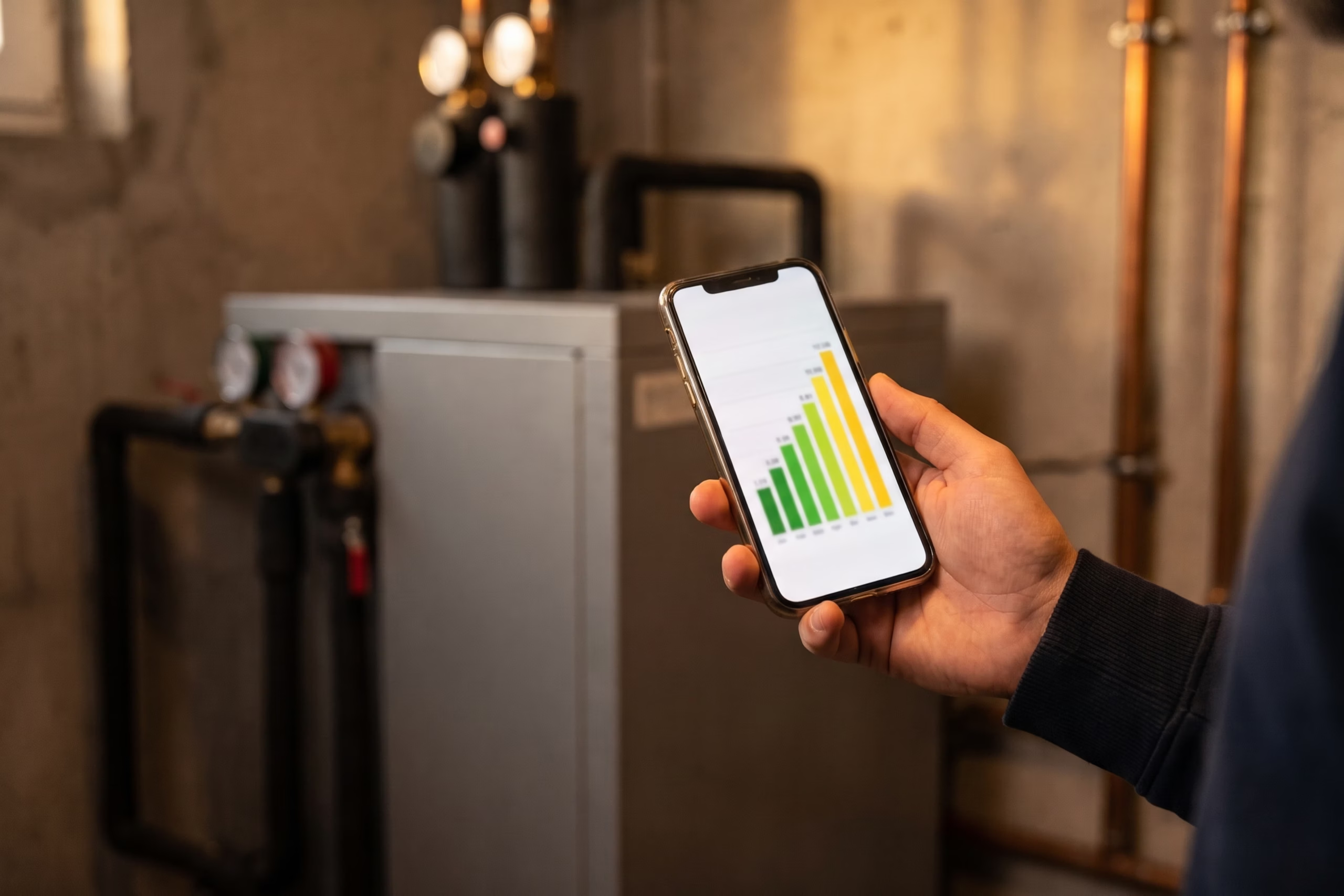
After seeing all these potential costs, you might feel that replacing your gas boiler will be expensive. But don’t worry—you won’t necessarily need every upgrade on the list. Some expenses are essential, while others depend on your home’s condition or can be avoided.
The best way to avoid unnecessary spending is to request an itemised quotation. Ask your installer to explain why each upgrade is needed and separate essential work from optional improvements. This helps you focus your budget on what your home actually requires.
Replacing a gas boiler with a heat pump can involve more than buying the equipment. Electrical upgrades, radiator changes, pipework, storage components and outdoor work can all affect the final cost. The right upgrades depend on your property, so a professional assessment is more useful than a one-size-fits-all estimate.
Contact FixDone to find a qualified local heating specialist in Düsseldorf and NRW. Request an itemised quotation that separates equipment, installation, necessary upgrades and optional improvements, helping you understand the real project cost before work begins.
During commissioning, the installer checks that the system has been installed and configured correctly. This may include verifying water flow rates, checking system pressure, testing safety devices, configuring heating curves and controls, and confirming that the heat pump operates as intended. Ask for a commissioning report and written operating instructions.
A heating curve determines how the system adjusts its flow temperature in response to the outdoor temperature. A correctly configured curve can help maintain indoor comfort without using unnecessarily high water temperatures. Ask the installer to explain the initial settings and how they can be adjusted after observing the home's performance.
Yes, properly selected air-source heat pumps can operate in freezing conditions. However, available heating output and efficiency can change as outdoor temperatures fall. The installer should verify the selected model's output at the local design temperature and explain how defrost cycles and any supplementary heater affect operation.
Not every system requires a buffer tank. Whether one is appropriate depends on the heat pump manufacturer's requirements, the heating circuit layout, water volume, flow stability and control strategy. Ask the installer to explain why a buffer tank is included or omitted and how that decision affects system operation.
A monobloc system contains the main refrigeration circuit within the outdoor unit, with heating water generally connecting the unit to the indoor system. A split system uses separate outdoor and indoor units connected by refrigerant pipework. The installation requirements differ, including pipe routing and refrigerant-related work. Ask which design is proposed and what maintenance and installation requirements apply.
Request the commissioning report, final system settings, equipment model and serial details, operating instructions, warranty information, maintenance guidance and relevant electrical documentation. You should also receive the final installation scope and details of any required hydraulic balancing. Keep these records for troubleshooting, servicing and future property transactions.
Monitor electricity consumption, indoor comfort, heating flow temperatures and the system's operating data over time. Where available, compare the heat pump's measured heat output with its electrical consumption to estimate its actual coefficient of performance (COP). Make sure the comparison period and operating conditions are understood, because hot-water production, defrosting and supplementary heating can affect the result. Ask the installer which readings the system provides and what would justify a follow-up assessment.
Um Ihnen ein optimales Erlebnis zu bieten, verwenden wir Technologien wie Cookies, um Geräteinformationen zu speichern und/oder darauf zuzugreifen. Wenn Sie diesen Technologien zustimmen, können wir Daten wie das Surfverhalten oder eindeutige IDs auf dieser Website verarbeiten. Wenn Sie Ihre Zustimmung nicht erteilen oder widerrufen, können bestimmte Funktionen beeinträchtigt werden.